
There’s a lot of noise right now about AI in marketing. Some people are acting like it’s going to replace teams. Others think it’s a magic button that runs their business for them.
Neither is true.
AI isn’t here to replace thinking, strategy, or people. It’s here to remove friction — especially in marketing, where a lot of time is spent on drafting, organizing, researching, and iterating before anything ever gets in front of a customer.
Used correctly, AI helps us move faster and smarter for our clients. Used poorly, it just creates more noise.
Here’s how we think about it and how we actually use it.
What AI Is Good At in Marketing
AI is good at:
- Drafting first versions of content, ads, and emails
- Turning rough ideas into structured plans
- Summarizing research and performance data
- Generating variations so we can test faster
- Speeding up execution so strategy can stay human-led
That’s the value.
AI doesn’t know your customers. It doesn’t understand your market. It doesn’t know what makes your business different or what your brand should sound like.
That part is still human.
We use AI as a tool inside the process — not as the process.
How We Use AI for Clients
Here are a few real examples of where it helps:
Strategy & Planning
We use AI to:
- Combine different data points into structured summaries
- Pressure-test ideas (“what if we focus on X instead of Y?”)
- Create initial outlines for campaigns and funnels
It helps us think faster, not think for us.
Content & Creative
We use AI to:
- Draft blog outlines
- Generate headline and ad copy variations
- Write first-pass emails and landing page content
Then we refine everything based on brand voice, customer psychology, and what we know actually works.
Research & Optimization
We use AI to:
- Summarize competitive landscapes
- Review trends and audience behavior
- Analyze performance data and extract insights
Again, speed — not replacement.
The Tools We Use (and Why)
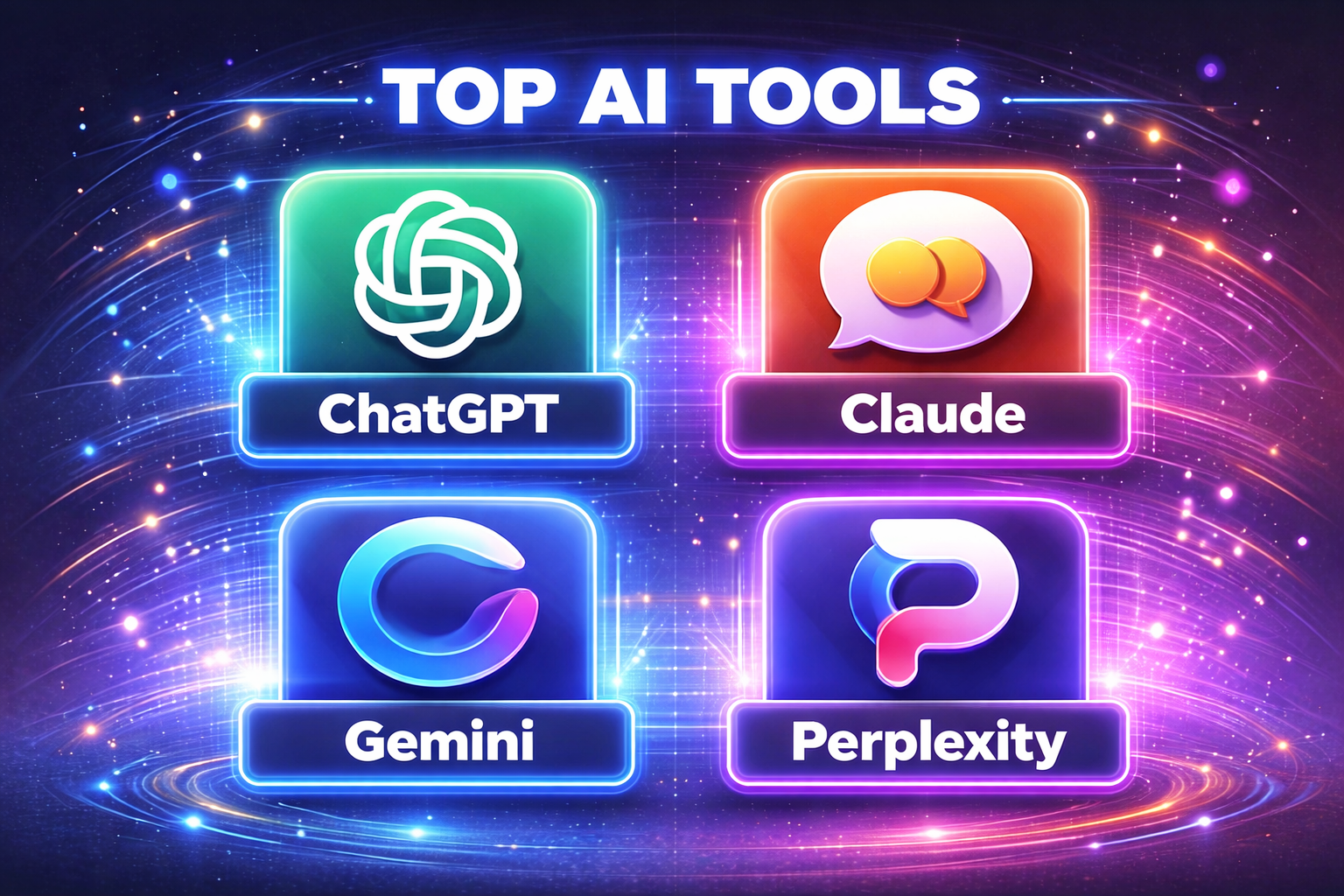
We primarily use a few tools depending on the job:
- ChatGPT for drafting, structuring ideas, and marketing workflows
- Claude for longer writing and internal documentation
- Gemini for data-heavy research and analysis
- Perplexity for fast research with sources
Each tool has strengths. None of them “think.”
They respond to how they’re guided.
Why Prompting Matters
AI output is only as good as the input.
If you ask it vague questions, you get vague answers. If you give it context — your industry, your goals, your audience, your constraints — it becomes useful.
That’s why we don’t just “ask AI.” We frame it properly based on real business context.
That’s the difference between AI being noise and AI being leverage.
Where Businesses Go Wrong With AI
We see a few common mistakes:
- Using AI to replace thinking instead of support it
- Publishing unedited AI content that sounds generic and untrustworthy
- Treating AI like a shortcut instead of a tool
- Ignoring brand voice, customer psychology, and positioning
AI can make bad marketing faster just as easily as it can make good marketing faster.
The difference is judgment.
The Bottom Line
AI is not a marketing strategy.
It’s a tool inside a strategy.
It won’t replace experience, creativity, or understanding your customer — but it does remove friction so more energy can go into those things.
That’s how we use it, and that’s why it’s useful.
If you’re a small business owner wondering whether AI matters for you — the answer isn’t “yes” or “no.” It’s “how.”
Used thoughtfully, it’s a real advantage. Used blindly, it’s just another thing to manage.
Share this Blog Post on Social Media




LinkedIn for Business Owners in 2026: A Practical Guide to Growing Through Content and Conversations